
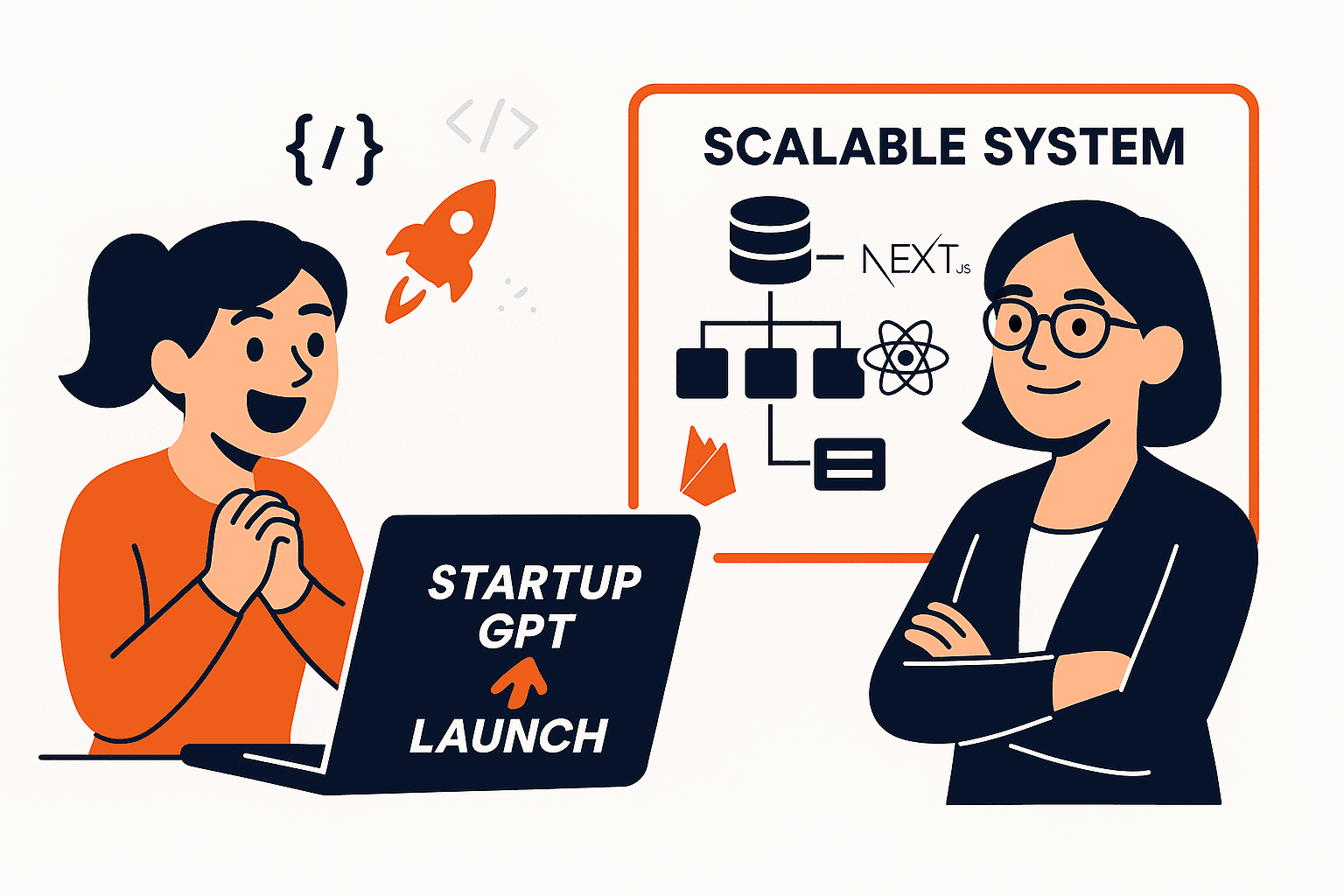
What Makes a Web App ‘Scalable’—And Why You Should Care Before You Launch
You’ve got the idea. The designs are done. The developers are building fast. You’re close to launch.
But there’s a question most non-technical founders don’t ask until it’s too late:
“Is our web app scalable?”
It sounds like a developer’s concern. But in reality, scalability affects your customers, your growth, your costs—and your ability to raise funding.
What Does “Scalable” Actually Mean?
A scalable web app can handle increased demand—without crashing, slowing down, or breaking your team.
Scalability isn’t just about more users. It’s about:
- More features
- More data
- More integrations
- More user types (admin, client, vendor, etc.)
- More usage spikes (marketing campaigns, PR, peak season)
A non-scalable app works great at 10 users... but falls apart at 1,000.
The 3 Types of Scalability (Explained Simply)
1. Technical Scalability
Can your infrastructure handle more traffic, storage, or background jobs?
- ✅ Is your backend stateless?
- ✅ Can you scale horizontally?
- ✅ Are you using services like AWS, Vercel, or Firebase?
2. Code Scalability
Can developers add features without breaking things?
- ✅ Is your code modular?
- ✅ Are core parts separated (auth, business logic, UI)?
- ✅ Are best practices followed (RESTful APIs, clean architecture)?
3. Team Scalability
Can more developers work without stepping on each other?
- ✅ Organized repo
- ✅ Reusable components
- ✅ Proper version control + CI/CD pipelines
What Happens If You Don’t Think About This Early?
| Issue | Impact |
|---|---|
| No rate limiting | Your app crashes under heavy traffic |
| Poor data structure | Reporting becomes a nightmare |
| Tight coupling | Small feature changes require full rewrites |
| No staging | You’re testing on production (😬) |
| No background jobs | Timeouts on basic processes |
Scalability = Credibility
Investors ask: “How prepared are you for growth?”
A scalable system shows you understand not just product-market fit, but product-infrastructure fit.
It builds trust with:
- Technical hires
- Clients with compliance needs
- Enterprise partnerships
- Funders who care about risk
How to Make Your App Scalable (Even at MVP Stage)
You don’t need to over-engineer. But you do need to avoid common traps.
✅ Use Proven Tech Stacks
- Next.js + Vercel
- Node.js + PostgreSQL
- Firebase + Cloud Functions
- Supabase, Hasura, etc.
✅ Design for Modularity
- Separate frontend/backend
- Keep logic out of UI components
- Build reusable APIs
✅ Prepare for Growth
- Monitoring (e.g., LogRocket, Sentry)
- Use a CDN for assets
- Environment configs
- Staging + production setup
Conclusion
Scalability isn’t a “later” problem. It’s a right now opportunity.
Thinking like a system builder—even if you’re not technical—sets you up for smoother growth, easier hiring, and better investor conversations.
Your web app isn’t just a tool. It’s your company’s foundation. Make sure it can grow with you.
 Turn Idea Into a Digital Product
Elevating Customer Experience.


© Copyright 2024 By Infatech